
Paraguay: Asunción, the Jesuit ruins and the Gran Chaco
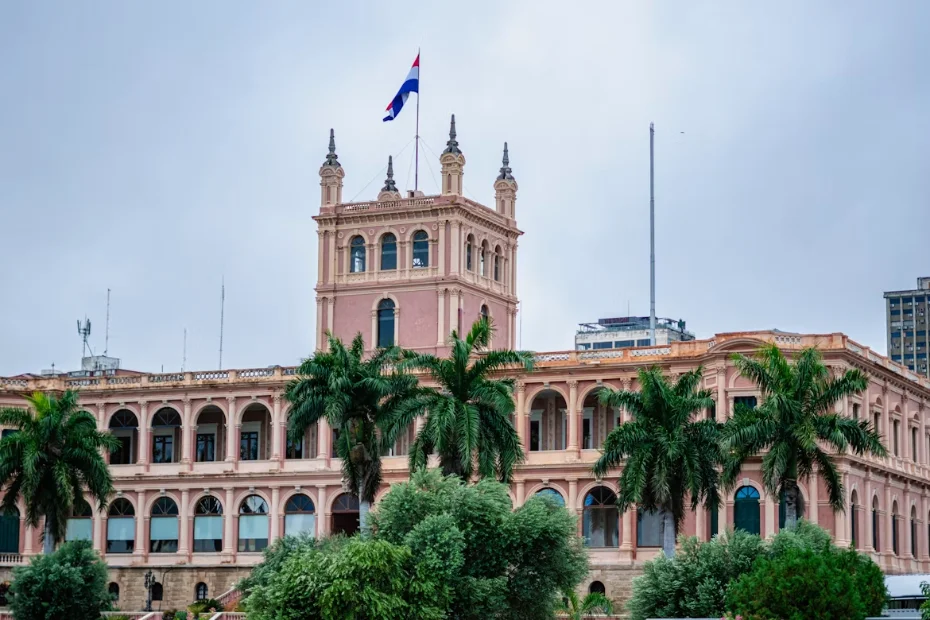
People kept asking me why Paraguay. Not Brazil next door, not Argentina with its tango and its glaciers — Paraguay, the one country in South America most travellers can't quite place on a map. That was exactly why. I'd grown tired of arriving somewhere and finding it already photographed to death. I wanted a place that hadn't rehearsed for me, and I got it the moment I stepped off the plane into Asunción's thick river-valley heat.
I travel alone, the way I always have, and I like the margins of a place more than its headline sights. Paraguay is almost entirely margin. There's no checklist anyone hands you, no queue of selfie sticks, no laminated itinerary. There's a faded capital on the edge of a great river, red-stone ruins in the south, and an enormous dry emptiness to the north that locals say half-jokingly that even they don't fully know. I had a rough plan and a lot of curiosity, which is usually all I bring.
Asunción, grandeur gone soft at the edges
Asunción wears its history like an old linen suit — elegant once, a little frayed now, and somehow better for it. I walked to the Panteón Nacional, the white domed mausoleum where the country keeps its heroes, and then to the Casa de la Independencia, the modest colonial house where Paraguay declared its break from Spain. Between the monuments, the city is gloriously unpolished: grand buildings with peeling shutters, a tram-less avenue baking in the sun, men playing cards in the shade with a thermos wedged under one arm.
That thermos, it turns out, is everywhere. Tereré — cold maté sipped through a metal straw from a shared gourd — is less a drink here than a way of organising the day. Someone offered me a sip within my first hour, a stranger on a bench, and refusing felt unthinkable. It's bitter, herbal, ice-cold, and it comes with conversation attached. Half of it was in Guaraní, the indigenous language spoken alongside Spanish by nearly everyone, slipping in and out of sentences like a second melody. I understood almost none of it and loved listening anyway.
« Paraguay doesn't perform for you. It just hands you a gourd, makes room on the bench, and waits to see if you'll sit down. »
In the capital, staying connected was genuinely fine. 4G across Asunción held up for maps, messages, the odd photo back home — I let my mother know I'd landed, found a café, booked a bus south, all without drama. I'll be honest with you though, because the whole point of these notes is honesty: this is the easy part of the country. Asunción is well covered and so is Encarnación in the south. It's the empty stretches between and beyond where the signal quietly gives up, and I'll come to that.
Red stone in the south: the Jesuit missions
The reason I'd really come was five hours south, near Encarnación, a riverside town that throws a serious Carnival each year and otherwise feels like a sleepy border crossing. From there I reached the two great Jesuit mission ruins, La Santísima Trinidad de Paraná and Jesús de Tavarangue — UNESCO sites both, the remains of the reducciones, the seventeenth- and eighteenth-century settlements where Jesuit missionaries and the Guaraní built whole communities before the order was expelled and the jungle moved back in.
I'd expected something modest. What I found stopped me in my tracks: roofless churches and plazas of deep red sandstone, carved angels still watching over arches that frame nothing but sky now, the grass growing up between flagstones laid three centuries ago. At Trinidad I more or less had the place to myself — a guard, a few birds, the heat shimmering off the stone. I sat on a broken wall for a long time and didn't take a single photo for a while, which for me is the truest sign that somewhere has got under my skin.
Out here the signal was already thinning. I'd downloaded the area offline the night before in Encarnación, which turned out to be exactly the right instinct — between the ruins and the small towns around them, the bars came and went, and I was glad not to be relying on a live map to find my way back to the bus.
North into the Gran Chaco, where the map goes quiet
Then I pointed myself the other way, north, into the Gran Chaco — a vast, flat, thorny expanse that covers more than half the country and holds a tiny fraction of its people. It's hot, dry, scrubby, and genuinely wild: I watched for the birds and the dust-coloured wildlife along the long straight road, passed German-speaking Mennonite colonies that have farmed this hard land for generations, and felt, more than anywhere I've been, the sheer scale of empty. There's a road, and then there's a great deal of nothing on either side of it.
The Chaco is also where I stopped pretending my phone would help me. Out there, the connection is thin to absent for long stretches, and I want to be straight about that rather than sell you a fantasy — this is not a place you cross trusting a live signal. I told people back home not to worry if I went quiet, kept offline maps loaded, and carried the kind of paper-and-patience backup that the Chaco quietly insists on. Somewhere along that endless road, with no bars and no hurry, I felt the particular calm of being properly out of reach.
📶 Inès's tip
Paraguay sits well outside the EU, so a European « roam-like-at-home » plan won't cover you here — sort your data out before you fly. Set up your eSIM before departure so it connects the moment you land in Asunción, for a ride into town and your first bus south. Expect solid coverage in Asunción and Encarnación, and genuine dead zones across the Gran Chaco and the rural south — download offline maps and your bus times while you've got signal, and tell people you may go quiet up north. Check your phone's compatibility in 30 seconds here and find your Paraguay plan on the destinations page (if a separate European stopover is part of the trip, an EU/EEA plan covers that leg instead).
What I take away
Paraguay gave me the thing I keep chasing and rarely find: a country that hadn't arranged itself for visitors, that handed me tereré and red-stone ruins and a horizon with nothing on it, and asked for nothing back. The connectivity matched the temperament — easy in the cities, sparing in the south, gone in the great dry north — and once I'd prepared for that instead of fighting it, the quiet stretches became the ones I think about most. Some places you visit. This one I feel I was simply allowed into.
— Inès, somewhere on a long straight road with a gourd of tereré going warm in my hand.