
Panama: between two oceans, from the canal to San Blas
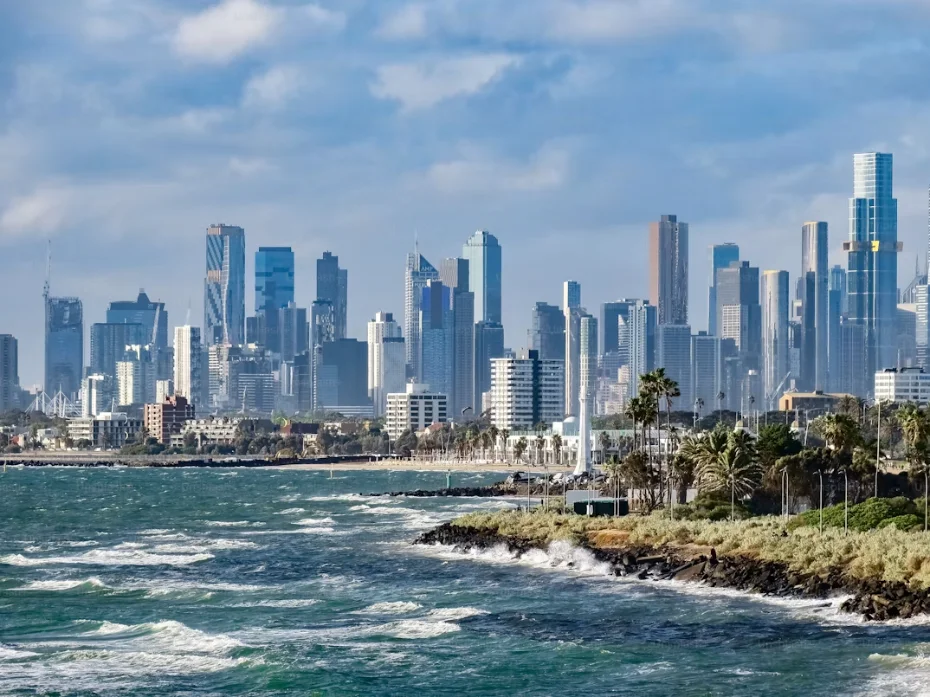
I arrived in Panama City the way you arrive at a hinge: a little disoriented, unsure which way the door swings. From the plane the isthmus looked impossibly thin, a green seam stitching two continents together while two oceans leaned in from either side. Down on the ground, the air was thick and warm and smelled faintly of rain that hadn't fallen yet. I had come for the canal, the way everyone says they have. I left thinking about everything around it.
Panama is a country that exists because of a shortcut. For a few centuries, ships went the long way around South America; then, just over a hundred years ago, people cut a channel through the narrowest part of the Americas and the planet's shipping lanes rearranged themselves overnight. You feel that history everywhere here — in the freighters stacked offshore, in the mix of accents, in the fact that the money in my pocket was US dollars even though the local currency is technically the balboa, pegged one-to-one and mostly living as coins.
Standing at Miraflores, watching the water do its trick
The Miraflores locks are the easy, honest place to start. There's a visitor centre with viewing terraces, and you stand there with a crowd of strangers and watch a ship the size of a small town ease into a concrete chamber. Then the gates close, the water rises — lifted, not pumped, by gravity alone from the lakes above — and the vessel climbs in front of you like something in a bathtub. It is slow and it is oddly moving. People clap. I clapped.
I'd read that the canal was widened around 2016, with a new set of larger locks to let the giant modern container ships through, and from the terrace a guide pointed out where the old and new systems run side by side. You don't need to understand the engineering to feel the scale of it. You just need to watch one ship pass and do the math on how many pass every single day, and how much of the world's stuff has, at some point, floated quietly through this gap in the land.
« A ship the size of a small town climbed in front of me, lifted by nothing but water and patience. »
Practically speaking, this is also where Panama is at its most connected, and I'll be honest about it because connectivity is one of those things you only notice when it's gone. In and around Panama City the mobile signal was solid — I pulled up the canal's transit schedule on my phone, checked which ship was which, sent a video to my brother of the gates swinging shut. Panama is not in the EU, so there's no roam-like-at-home arrangement to lean on; I was running a local data plan on my eSIM, and in the capital it never let me down.
Casco Viejo, and a gold altar that survived a pirate
Back in the city, the old quarter — Casco Viejo — is where I lost a couple of afternoons happily. It's the restored colonial heart of Panama City: peeling-then-repainted facades, narrow streets, bougainvillaea spilling off wrought-iron balconies, and rooftop bars where the modern skyline glitters across the bay like a completely different city, which in a way it is. You can stand on a roof at dusk with a cold drink and see both Panamas at once — the glass towers and the old stone — and the contrast does half the storytelling for you.
I ducked into the Iglesia San José mostly to get out of the heat and found the famous golden altar inside, glowing in the dim. The story locals tell is that when the pirate Henry Morgan sacked the old city, the altar was disguised — painted over, or smeared with mud, depending on who's telling it — so the raiders would pass it by. I can't vouch for which version is true, but standing in front of all that quiet gold, I wanted every version to be.
San Blas: where the signal, and almost everything else, drops away
Then I went where the map gets sparse. The San Blas islands — Guna Yala — are an archipelago off the Caribbean coast governed by the Guna people on their own autonomous terms, and going there feels like stepping off the grid in the most literal sense. You travel out by boat to tiny islets that are sometimes barely more than a handful of palm trees and a ring of white sand, and you sleep in basic cabins with sand floors. There are sailboats threading between the islands; there is no resort gloss; there is, blissfully and slightly alarmingly, almost no phone signal.
I want to be straight about that last part. Out in San Blas my data was capricious at best and gone entirely most of the time — and that is not a flaw of any plan, it's just the place. There are no towers chasing you across that water. The first hour without bars made me twitchy; by the second day it was the whole point. I'd told people back home roughly when to expect me and then let the islands have me, and I'd recommend doing exactly that: download your maps, send your messages while you're still in town, and then surrender to being unreachable.
Panama keeps offering these contrasts. There's Bocas del Toro further up the Caribbean side, all surf and easy island time; there's Boquete up in the cool highlands, where the coffee is grown and people whisper about glimpsing a resplendent quetzal in the cloud forest. As a continental bridge, the country is improbably rich in wildlife — species from two land masses overlapping in one narrow place. I didn't see a quetzal. I'm choosing to take that as a reason to go back.
📶 Romain's tip
Panama isn't in the EU, so there's no roam-like-at-home here — a local data eSIM is the move. Coverage is reliable in Panama City and along the canal, but treat San Blas (Guna Yala) and the deep jungle as genuinely off-grid and download everything you'll need beforehand. Check your phone's compatibility in 30 seconds here and find your plan on the destinations page (if your trip also routes through Europe, a separate EU/EEA plan covers that leg too).
What I take away
Panama taught me to hold two things at once — two oceans, two continents, two cities stacked on one bay, the connected hum of the capital and the clean silence of the islands. The canal is the headline, and it earns it. But what stayed with me was the switch: signal one day, none the next, and the way the second taught me to look up. Go for the ships climbing on water. Stay for the moment the phone goes dark and the world gets louder.
— Romain, between two oceans, learning to be unreachable.