
Serbia That Never Sleeps: Belgrade, Novi Sad and the Balkans
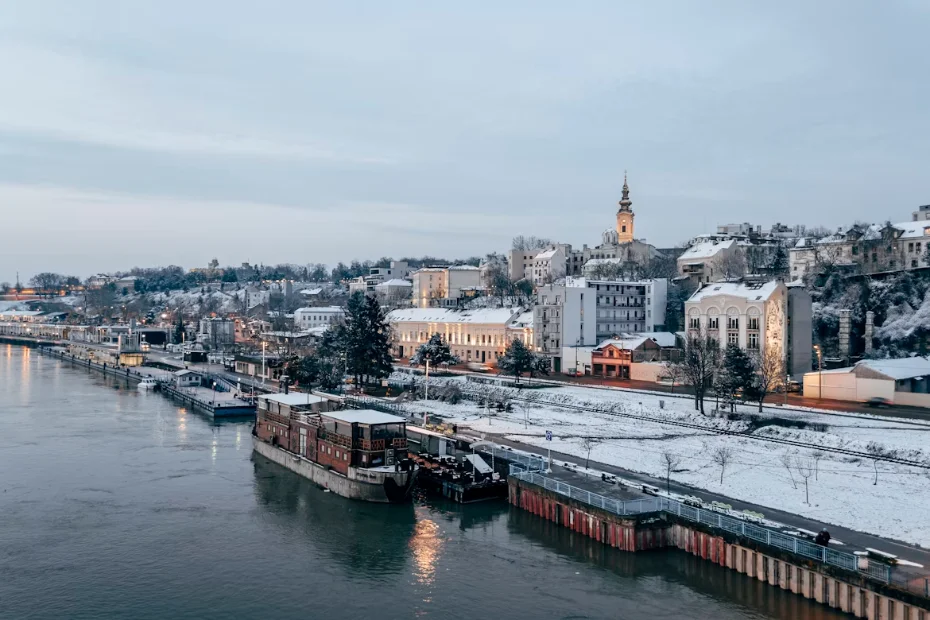
I arrived in Belgrade on a thirty-degree afternoon, and the first thing I understood is that this city runs on a different clock. People here eat dinner when other capitals are going to bed, and then the evening actually begins. I'd come for a few quiet days between two European trips; Belgrade had other plans, and I let it. Serbia sits right in the middle of the Balkans, a crossroads that everyone has wanted to control for two thousand years, and you feel that the moment you stand on the old fortress walls — below me the Sava poured into the Danube in a wide grey-green seam, and behind me the city stacked centuries on top of each other without apology, Ottoman to Habsburg to socialist to brand new.
Belgrade, the city that refuses to sleep
I started at Kalemegdan, the fortress of Belgrade, perched on the spur where the two rivers meet. It's a park now, full of joggers and chess games and kids on the old cannons, but the bones of the citadel are still there, and the view at sunset is the kind that makes you go quiet. From there I wandered down into Skadarlija, the cobbled bohemian street where accordion music spills out of taverns and dinner takes three slow hours. Later, friends took me down to the splavovi — the floating bars moored along the riverbanks — and the night dissolved into one long warm blur of music over water.
« Belgrade doesn't sleep, it negotiates with the dawn — and the only thing that ran out before I did was my data plan's goodwill. »
Here's the part I want to be honest about, because it tripped up two people at my hostel: Serbia is in Europe, but it is not in the EU or the EEA. That sounds like a footnote until your phone bill arrives. The European « roam-like-at-home » that makes your plan work seamlessly in France, Croatia or Greece generally does not cover Serbia — exactly the same trap as Switzerland or the United Kingdom. Several travellers I met got hit with out-of-bundle roaming charges the moment they crossed the border, sometimes without noticing until the warning text arrived. I'd sorted an eSIM before I landed, and while they rationed their messages, I had data running from the airport bus.
Novi Sad, the fortress and the quieter north
An hour north by train, Novi Sad is Belgrade's calmer sibling — a Central European old town of pastel facades and café squares, and across the Danube the great star-shaped fortress of Petrovaradin watching over it. I climbed up for the view and the famous clock tower whose hands are reversed, the big hand counting hours so boatmen on the river could read it from afar. Every July this same fortress fills with a hundred thousand people for the EXIT festival; in the off-season I had the ramparts almost to myself, just the wind and the slow brown river below.
From Novi Sad I took a day to wander the monasteries of Fruška Gora, the low green hills dotted with Orthodox sanctuaries and small wineries, and this is where coverage got honest about Serbia's geography. In Belgrade and Novi Sad the network was fast and unbothered; out in the hills and the deeper countryside it thinned, dropping to a single bar between villages. It always came back — I'd just learned to download the map before leaving town.
Rakija, ćevapi, and the long way south
Serbia is also a country you taste. Rakija — the fruit brandy that appears at the start of every meal and the end of every argument — was poured for me by a grandmother who refused to let me pay and a bartender who insisted I try three kinds. Plates of ćevapi, little grilled minced-meat fingers with raw onion and bread, became my default lunch. I went further south to Niš, grittier and older, where the layers of empire feel even closer to the surface, and I kept a loose thread going with people back home the whole way — a photo of the fortress, a one-line message from a tavern, the price of a coffee paid in dinars, never euros, because Serbia keeps its own currency too.
📶 Hugo's tip
Serbia's catch: it's in Europe but outside the EU/EEA, so your European « roam-like-at-home » plan usually won't cover it — expect out-of-bundle roaming charges, exactly as in Switzerland or the UK, unless you arrive prepared. Install an eSIM before you land and have it active by the time you reach the city. Coverage is strong in Belgrade and Novi Sad and thinner in the hills, so download an offline map for Fruška Gora and the countryside. Check your phone's compatibility in 30 seconds here and find your Serbia plan on the destinations page (if your trip also runs through EU/EEA countries, your usual European plan covers those — a regional EU/EEA plan works too).
What I take away
Serbia gave me an electric capital, a fortress town that knows how to be still, and a warmth at every table that I didn't expect and won't forget. It's European to its core and yet just outside the lines that make your data plan simple — a small bit of border arithmetic that costs five minutes before you leave. Sort it once, then let Belgrade keep you up too late with both hands free.
— Hugo, awake too late on the riverbank, watching two rivers become one.