Nigeria: Lagos, Afrobeats and the energy of a giant
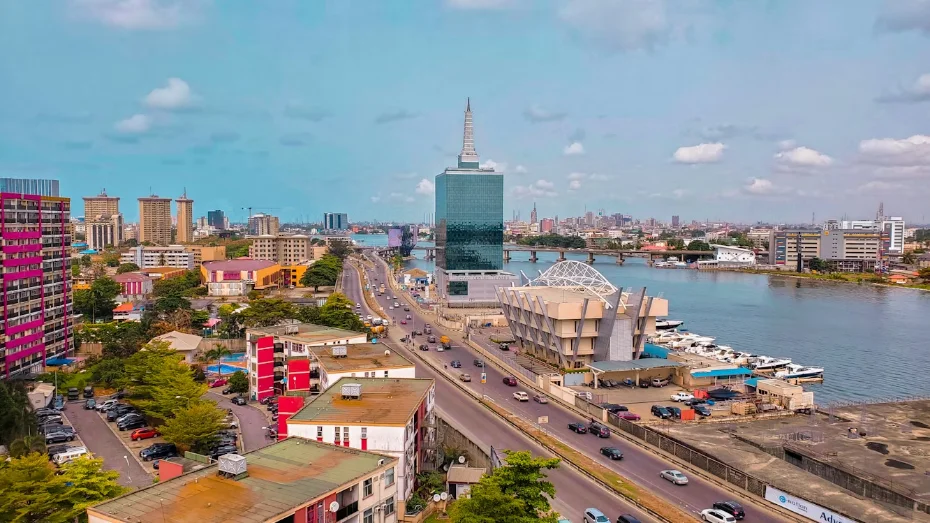
Lagos doesn't ease you in. You step out of the airport into a wall of heat, horns and voices, and the city is already at full volume, already deciding what to do with you. I'd been warned about the traffic, the scale, the famous "go-slow" of cars that don't move — and all of it is true. What nobody quite manages to convey beforehand is the energy underneath it, the sense that everyone around you is building, hustling, performing something, all at once. I stopped fighting it on day two and just let the current carry me.
This is the most populous country in Africa, and Lagos feels like it holds a good slice of that crowd in one metropolis split between the lagoon islands and the sprawling mainland. Lagos Island is the old commercial heart; Victoria Island and Lekki, across the water, are where the glass towers, the galleries and the rooftop bars cluster. I crossed those bridges more times than I can count, watching the water and the skyline and the boats, learning that in Lagos the distance between two points is measured in hours, not kilometres.
Markets, music and the long Lagos night
I started where the city is loudest: Balogun Market, a labyrinth of fabric, plastic, electronics and shouted prices on Lagos Island. It's overwhelming in the best and the most literal sense — you don't browse Balogun, you get pulled through it. I bought far too much ankara cloth from a woman who laughed at my haggling and then taught me how to do it properly. By the time I came out, sweat-soaked and grinning, I understood the city a little better: nothing here is passive.
But the reason half the world now knows the word "Lagos" is the music. Afrobeats — the genre that's taken over playlists everywhere — was born in this soup of influences, and its roots run back to Fela Kuti, the firebrand who built the original Afrobeat and a venue called the Shrine. The New Afrika Shrine, run by his family, still hosts gigs, and every October Felabration turns it into a week-long celebration of him. I caught a regular night there, not the festival, and it was enough: a horn section that didn't quit, a crowd that knew every word, the bass arriving through the floor before it reached my ears.
« You don't listen to Lagos. You stand in it and let it move through you. »
A practical note from the middle of all this, because it matters more than you'd think: Nigeria sits well outside the EU, so the roam-like-at-home arrangement that keeps your phone cheap across Europe does not apply here at all. In Lagos itself the mobile networks are generally decent — I had usable data most of the time on the islands and across the bridges — but the thing that actually catches travellers out isn't coverage, it's power. Outages are frequent; a lot of places run on generators, and your phone drains faster than you expect when it's hunting for signal and shooting video all night. I learned to treat a charged battery as the real currency.
The jollof question, and a country beyond Lagos
You cannot write honestly about Nigeria without the food. I ate jollof rice — that smoky, tomato-deep, slightly charred party rice — until I had opinions, which is dangerous, because there's a long-running, only-half-joking "jollof war" between Nigeria and Ghana over who makes it best. I am a guest and I will keep my verdict to myself, but I'll say the version cooked at the bottom of the pot, where it catches and crisps, is the one worth fighting over. Add suya from a roadside grill — skewered beef dusted in a peppery, peanutty spice — and a cold drink, and that was most of my evenings sorted.
Lagos is not Nigeria, of course, the way no single city is a whole country. There's Abuja, the planned capital up in the centre, calmer and more deliberate, with the great dome of the National Mosque facing the National Christian Centre across the city and Aso Rock looming behind the seat of government. There's Calabar in the south-east, which throws a vast street carnival every December. And there are the broad cultural worlds the country is woven from — Yoruba, Igbo, Hausa, among many others — each with its own language, food and music. I only scratched it. You could spend a year and say the same.
Hustle, not chaos
I want to be careful here, because Lagos gets flattened in the telling — either romanticised or written off as dangerous. Neither is fair. Yes, it's a huge, dense, fast city, and I did what I'd do in any huge city: kept my phone tucked away in crowds, agreed fares before getting in, didn't wander unfamiliar areas alone late at night, and leaned on people who knew the ground. With that ordinary caution in place, what I mostly met was warmth, humour and an almost dizzying creativity — the same drive that built Nollywood into one of the busiest film industries on earth, churning out stories at a pace that would make Hollywood blink.
The hustle isn't chaos. It's a city of twenty-something million people improvising prosperity in real time, and being let into the rhythm of it — even for a week — felt like a privilege I hadn't earned and didn't want to leave.
📶 Nora's tip
Set your eSIM up before you fly so it's live the moment you land — you'll want maps and a ride-hailing app from the airport on day one. Coverage is generally fine in Lagos and Abuja and patchier elsewhere, so the real survival kit is power: carry a solid power bank, top up whenever you find a socket, and don't count on the grid. Check your phone's compatibility in 30 seconds here and find your Nigeria plan on the destinations page (if a separate European stopover is part of your trip, an EU/EEA plan covers that leg too).
What I take away
I left Lagos tired in the way that good cities tire you — too much seen, too much heard, the bass still going somewhere behind my ribs. I take away the cloth from Balogun, the burn of suya, a Shrine night I'll be describing for years, and a recalibrated sense of what a city can be when it simply refuses to stand still. Nigeria asks something of you. Give it, and it gives back tenfold.
— Nora, still humming an Afrobeats line I can't name, somewhere over the Atlantic.