
Hanami in Japan: a week beneath the cherry blossoms
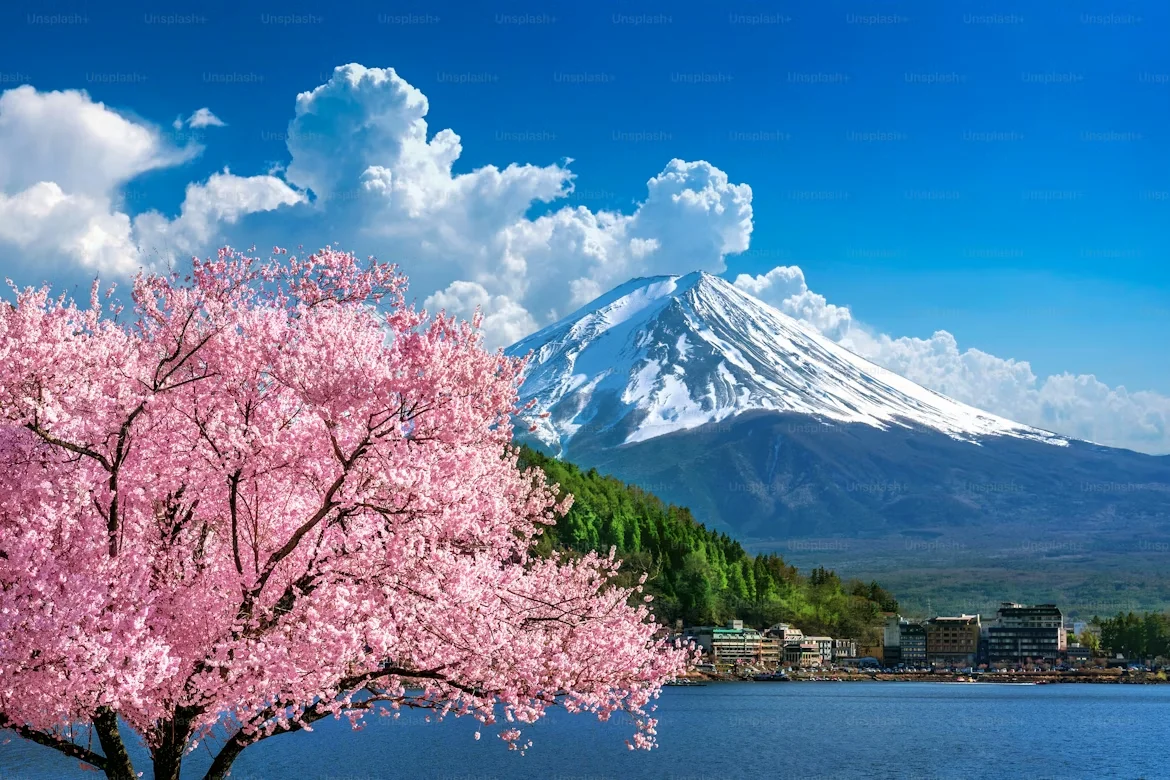
I almost missed it. I'd booked Japan for early April months in advance, the way the guidebooks beg you to, and then watched the forecasts all winter like a worried farmer. The sakura don't wait for anyone. They open when they decide to — usually somewhere between late March and April, depending on the region — and then, for about a week of full bloom, they hand you the most beautiful thing in the country before letting it fall. I came for that one fragile week. I spent the whole trip terrified of arriving a day too late.
Hanami, literally, means « flower-viewing ». That's the whole festival: people sit under the cherry trees and look. No stage, no parade. Just blankets on the grass, bento boxes passed around, the trees overhead doing the work. The first afternoon, in a Tokyo park, I understood that I hadn't come to see an event. I'd come to sit very still inside a thing that was already disappearing.
Sitting under the trees in Tokyo
My first picnic was in Ueno Park, because everyone said to and everyone was right and everyone was also there. Tarpaulins edge to edge, families, students, salarymen who'd clearly come straight from the office, all of us under a low ceiling of pale pink. Someone two blankets over offered me a slice of mandarin without a word — a small kindness I'd later learn is its own quiet ritual. The petals came down in the breeze like slow confetti and landed in my tea, and nobody brushed them off, because that's the point.
The next morning I went to Shinjuku Gyoen instead — calmer, ticketed, with dozens of cherry varieties opening on slightly different schedules so the bloom lasts a touch longer. I sat for two hours and did, essentially, nothing. I watched an old man photograph the same branch from eleven angles. I watched the light move. For someone who usually fills every minute, it was almost uncomfortable, and then it wasn't.
« The cherry blossoms aren't beautiful in spite of falling. They're beautiful because they fall. »
Here's the honest, practical part, woven right into all that stillness. Japan's network is excellent — but at peak bloom the famous parks are absolutely packed, and tens of thousands of phones in one place will slow even a great signal to a crawl. I learned that the hard way trying to load a map in the middle of Ueno on a Sunday. What actually saved my trip was checking the bloom forecast — the sakura zensen, the « cherry blossom front » — in real time each morning before I left, while I still had a clean connection. I'd had an eSIM running since the airport, so the moment I landed I could already see how far the front had advanced and where full bloom, mankai, was being called. With a window that short, that one daily check was the difference between catching the peak and chasing it.
Chasing the front to Kyoto
The thing nobody quite prepares you for is that bloom is a moving target. The front rolls up the archipelago from the warm south — it reaches Okinawa first, and weeks later crawls into cold Hokkaido in the north. You don't watch the sakura so much as try to intercept them. So when Tokyo started shedding petals, I took the train to Kyoto, betting the city was a few days behind. It was.
Kyoto rewarded the gamble. I walked the Philosopher's Path, that canal-side lane lined with cherry trees, petals floating on the water the whole way. At Maruyama Park, the city's old hanami heart, I came back after dark for yozakura — the trees lit up at night, a single huge weeping cherry glowing over the crowd like a lantern. There's something almost unbearable about a cherry tree at night: lit from below, impossibly soft, and you already know it won't be there next week.
I'd planned to push west to Himeji, where the white castle floats above a moat of cherry blossom, and I ran out of days before the bloom ran out of north to climb. That's hanami, though. You don't see all of it. You see your week of it, and you let the rest go — which, I think, is the lesson the trees are teaching the whole time.
Mono no aware, in a phrase I can't translate
There's a Japanese idea that hovers over the whole season: mono no aware, roughly the gentle ache of knowing that beautiful things pass. I won't pretend to fully grasp it as a visitor. But I felt the edge of it on a bench in Maruyama, watching petals come down under the floodlights, a little sad and completely at peace at the same time. The Japanese don't seem to mourn the falling. They turn it into the celebration. That reframing followed me home.
📶 Camille's tip
Japan is outside the EU/EEA, so roam-like-at-home doesn't apply here — but an eSIM earns its keep for two reasons. First, you're online the second you land, no airport SIM queue. Second — and this is the hanami-specific bit — the big bloom spots are mobbed at peak, and the crowd can choke even Japan's excellent network, so check the bloom forecast each morning before you reach the park, while your signal is clean. Check your phone's compatibility in 30 seconds here and find your plan on the destinations page (for a broader European trip on the way out or back, an EU/EEA plan works too).
What I take away
I came back with no grand monument in my photos — just a week of pink, some petals pressed flat in a notebook, and the memory of sitting on the grass doing nothing while something rare happened over my head. Hanami isn't a thing you tick off. It's a week you race to be present for, knowing the whole point is that it ends. Book absurdly early, watch the front, and when you finally get there, put the phone down and just look. The falling is the festival.
— Camille, under a sky that was already letting go.