
Guatemala: Antigua under the volcanoes, Lake Atitlán and Tikal
A year after I drove the Maya roads of the Yucatán in Mexico, I came back to the same ancient world from a different door. Guatemala holds the southern half of that story — the same carved gods, the same long memory — but it stacks it all under volcanoes and folds it into mountains. I landed in Guatemala City, climbed straight onto the road, and within an hour the capital had given way to cobblestones, pine ridges, and a cone of rock watching me from the horizon.
I travel alone, the way I always do, with a soft plan held together by chicken bus departures and the patience of strangers. The chicken buses alone are worth the trip — old American school buses repainted in carnival colours, chrome and horns and a teenager hanging off the door collecting fares as you climb the switchbacks. Nobody hurries here. The land won't let you.
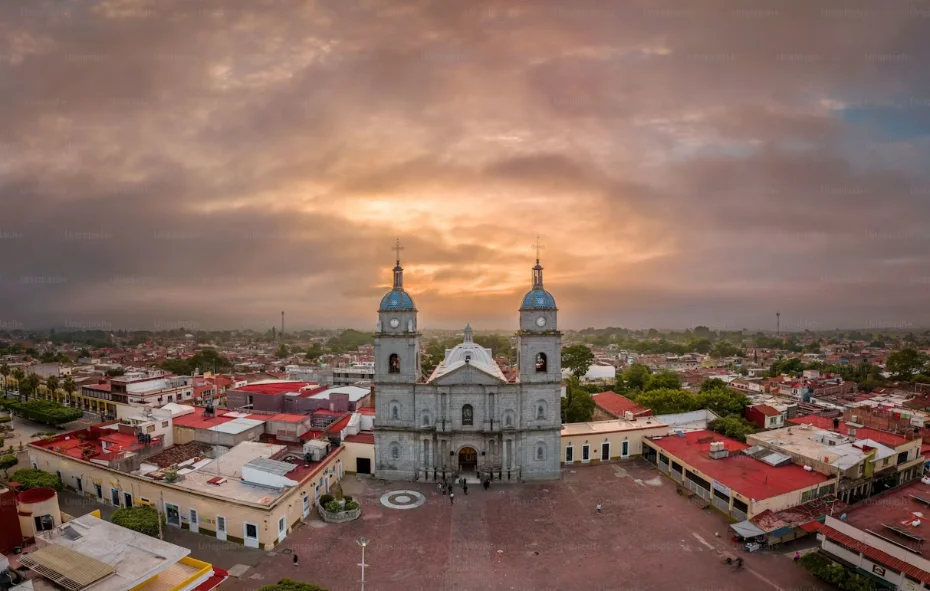
Antigua, the city of stone under Agua
Antigua is the kind of town that makes you walk slowly whether you meant to or not — the cobbles see to that. Pastel walls, ruined convents the colour of bone, and behind every street, looming and almost theatrical, the Volcán de Agua. I happened to arrive in the run-up to Semana Santa, when the locals lay down alfombras — carpets of dyed sawdust and flower petals, painstaking and gorgeous — across the streets, only to have a procession walk straight over them hours later. Everything beautiful here is a little bit doomed, and somehow better for it.
In town the connection was honestly fine. I sat on a rooftop café angled at the volcano, messaged a hostel by the lake to hold a bed, and uploaded a few photos while the bells of a dozen churches argued across the valley. Antigua and the capital are the easy part of Guatemala for your phone — solid signal, the kind you stop thinking about. I'd learn soon enough that the rest of the country plays harder to reach.
The thing that broke me open, though, came at night. I trekked up Acatenango, the big volcano you climb to watch its neighbour misbehave — and Fuego did not disappoint. After a brutal slog up through cloud and ash, I sat at altitude in the cold and the dark while, across a black gulf, Fuego coughed orange into the sky every few minutes, low rumbles I felt in my chest before I heard them. These are active volcanoes; you go with a guide, you follow the rules, and you never forget the mountain is in charge. I have never been so cold or so glad to be awake.
« Across the dark, Fuego threw orange into the sky every few minutes — and I felt the rumble in my chest before I ever heard it. »
Lake Atitlán, a different village at every shore
From Antigua I dropped down to Lake Atitlán, a flooded crater ringed by volcanoes, and spent days hopping between its villages by lancha — the little public boats that buzz across the water from dock to dock. Each shore is its own world: Panajachel busy and practical, San Pedro young and loud, San Marcos hushed and barefoot among the avocado trees. You don't pick one. You let the boat decide your afternoon.
Up here is where my phone started to sulk. Around the lake and through the highlands the signal turned moody — solid in one village, a single flickering bar in the next, gone entirely on the water between them. I leaned hard on offline maps and on simply asking people, which the highlands reward anyway. One morning I rode a chicken bus up to the Chichicastenango market, a vast highland sprawl of textiles, masks, marigolds and bargaining, and gave up on my phone completely. Some places are better navigated with your eyes.
Tikal, the temples above the canopy
Then the long haul north into the Petén jungle, to Tikal — and this is where Guatemala's Maya story rises out of the trees, literally. I went up for sunrise, climbing in the dark to the top of Temple IV, where the stone breaks above the canopy and you sit with your legs dangling over an ocean of green. As the light came, howler monkeys started up somewhere below — a roar so deep and so close I genuinely thought, for one foolish second, that it was something enormous and angry. It's just a small monkey with an outsized voice. The jungle does that to your sense of scale.
Out there the signal all but vanished, and I'd planned for exactly that. I'd downloaded the site map, screenshotted my bus times, and told my sister the night before that I'd be dark for a day — so when a temple I'd only seen in photographs simply appeared through the mist between two trees, I wasn't reaching for my phone. I was just standing there, mouth open, with monkeys roaring and not one bar on the screen. Some moments you carry out of the jungle and share later, when the world reconnects.
📶 Sarah's tip
Guatemala sits outside the EU, so a European « roam-like-at-home » plan won't cover you here — sort your data before you fly. Set up your eSIM before departure so it connects the moment you land in Guatemala City, ready for the ride out and your first night's bed. Expect solid coverage in the capital and Antigua, moody and patchy around Lake Atitlán and through the highlands, and next to nothing deep in the Tikal jungle — so download offline maps and your bus times while you've still got bars. Check your phone's compatibility in 30 seconds here and find your Guatemala plan on the destinations page (if a separate European stopover is on the cards, an EU/EEA plan covers that leg instead).
What I take away
Guatemala gave me the half of the Maya world I'd been missing — not the flat, hot peninsula of Mexico, but the same gods raised up cold and high among volcanoes and pine. I kept just enough signal to hold the next bed and catch the next bus, and let the rest go: the lake crossings, the market, the dark slope under Fuego, the jungle at dawn. The best of it happened with no bars on the screen at all. That, I think, is the point.
— Sarah, somewhere on a chicken bus between two volcanoes, watching the road climb.