
Fiji: islands, soft corals and the slow Pacific rhythm
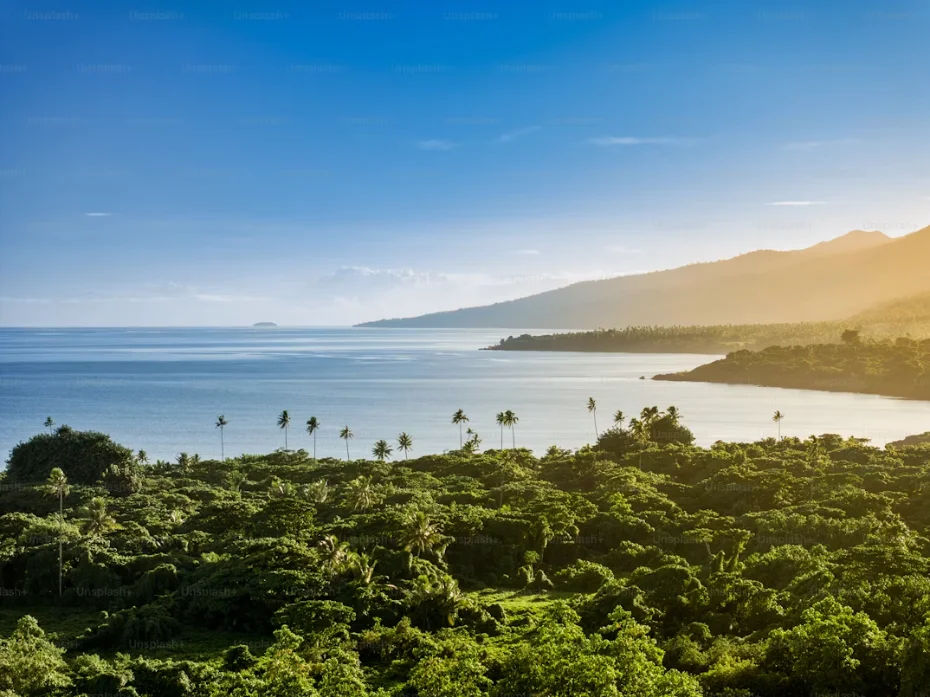
The first word you learn in Fiji is "bula", and you hear it before you've even cleared the airport in Nadi: from the porter, from the taxi driver, from a stranger crossing the road. It means hello, but it carries more than that — health, life, welcome, the whole works. By the end of the first day you've said it a hundred times and meant it. I came for the islands, the reef and the slow Pacific rhythm, and what I found was a country that says hello to you constantly and means it every time.
Fiji isn't one island, it's somewhere north of three hundred — though only a fraction are inhabited, and you'll only ever set foot on a handful. The maths matters because it changes how you travel: less of a route, more of a hopping. You base yourself, you take a boat, you come back salt-crusted, you do it again. The big island, Viti Levu, holds the airport at Nadi and the capital at Suva on the far side, and a long coastal road — the Coral Coast — stitching the two together along the southern shore.
Boats between the Yasawa
The islands everyone pictures — white sand, clear shallows, palms leaning over turquoise — are mostly out in the Mamanuca and Yasawa archipelagos, west of Viti Levu. The Mamanucas are closer, an easy day-boat from the mainland; the Yasawas string out further north, a chain of volcanic islets reachable by the Yasawa Flyer, the catamaran that runs the route and drops you island by island. I took it up the chain, watching the mainland shrink behind the wake, the water going from blue to a blue I didn't have a word for.
What struck me wasn't any single beach — there were too many, and ranking them felt beside the point. It was the rhythm. You arrive, someone walks down to the boat to meet you, you settle into a pace set by tides and meals and the angle of the sun. There's no rushing it, and after a day or two you stop trying. Time on the small islands runs on its own clock, somewhere near the date line, where you're among the first places on Earth to see tomorrow.
« Out here you don't keep time, the tide keeps it for you, and it's never in a hurry. »
This is where I should be honest about staying connected, because it shapes the trip more than you'd expect. On Viti Levu — around Nadi, Suva and the Coral Coast — the network is fine; you can post, map, message without much drama. Out in the Yasawas and the smaller Mamanucas it gets patchy fast, and on plenty of the little islands it's faint to flat-out absent. Some places lean into that on purpose — they'll tell you upfront there's no signal, and they mean it as part of the offer. I stopped fighting it around day three and let the disconnection be the point.
The reef, up close
You don't come to Fiji and stay dry. The reef is the other half of the country, the half underwater, and the soft corals here have a reputation — fans and trees of them in colours that look turned up past realistic, swaying in the current like the whole seabed is breathing. I'm no expert diver, mostly a snorkeller, and even floating face-down off the boat in three metres of water I saw enough to understand the fuss: parrotfish grinding at coral, a reef shark cruising the drop-off below, the light cutting down in shafts.
A word on timing, because the Pacific has a season with teeth. The cyclone season runs roughly November to April — the wetter, stormier stretch — and while plenty of people travel then and have a fine time, it's worth knowing before you book. I went in the drier months and got steady weather, but the locals will tell you the sea writes its own schedule, and you'd be wise to listen.
Kava, villages and the courtesy of arriving well
One evening on a small island I was invited to share kava — the earthy, muddy-tasting drink made from a root, served from a communal bowl, passed around with a clap and a word. It is not a cocktail; it's a slightly numbing, deeply social ritual, and sitting in the circle as the bowl came round was one of those moments where I understood I was a guest, not a customer. If you visit a village, the custom is sevusevu — you bring a gift, traditionally kava root, and present it to the head of the village, who welcomes you in. Cover your shoulders, take off your hat, follow your host's lead. The hospitality is real, and it asks a little courtesy back. Prices, by the way, run in Fijian dollars — worth a glance before you assume a number.
📶 Yann's tip
Fiji is outside the EU, so a European roam-like-at-home plan won't follow you here — sort local data before you fly. Set your expectations honestly: coverage is decent on Viti Levu around Nadi, Suva and the Coral Coast, but patchy-to-absent out on the Yasawa and Mamanuca islands — and on many small islands that's by design, so download offline maps and let people know when you'll go quiet. Check your phone's compatibility in 30 seconds here and find your plan on the destinations page (for a broader European trip on the way through, an EU/EEA plan works too).
What I take away
Fiji taught me that being unreachable can be a gift you give yourself rather than an inconvenience you suffer. The islands don't need you to be online; the kava circle doesn't pause for a notification; the reef looks the same whether or not anyone sees the photo. I came for white sand and soft corals and got those in abundance — but what I carried home was the rhythm, and a hundred "bula"s, and the strange relief of a day where the only thing keeping time was the tide.
— Yann, on a beach with no bars on the phone and no reason to mind.