
From Lisbon to Porto: Portugal in slow motion
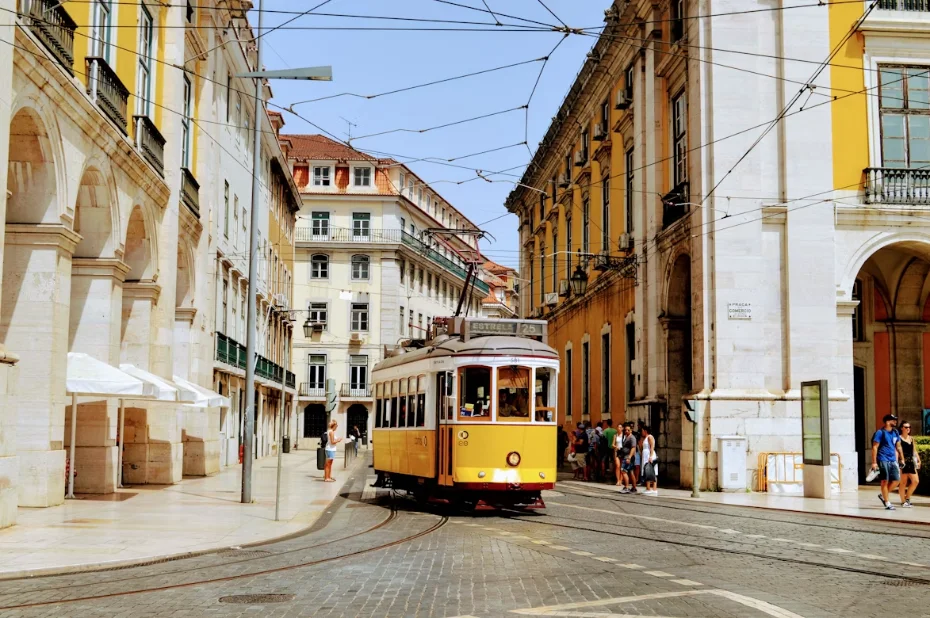
I arrived in Lisbon by mid-morning, and the first thing the city did was send me uphill. That's Lisbon's whole personality, really: seven hills, a tangle of tiled façades, and a tram that groans around corners as if it too is surprised it still makes the climb. I'd promised myself a week to go slow — from Lisbon up to Porto, with a few detours I couldn't have planned in advance — and the city seemed perfectly fine with that.
My first morning belonged to the miradouros. These are the viewpoints scattered across the hilltops, and they are the great free gift of Lisbon. I climbed to Senhora do Monte with a coffee going cold in my hand, watched the rooftops spill down toward the Tejo, and let the famous Tram 28 do the legwork on the way back — it rattles through Alfama and Graça like a clattering little time machine, packed with locals and visitors in equal, sweaty measure.
Pastéis, fado, and the art of lingering
Let's talk about the pastel de nata, because I am incapable of not talking about it. Warm from the oven, the custard still trembling, a dusting of cinnamon if you want it — I had my first in Belém, in the long-queued temple that's been making them since the 1800s, and then I spent the rest of the week conducting very serious comparative research at every café that would have me. No conclusion. That was the point.
In the evening, I followed the sound of fado into a small tavern in Alfama. It's a melancholy music — saudade, that untranslatable Portuguese ache for something lost or never quite had — and the rule in the good places is simple: when the singer starts, you stop. Phones down, forks down. I'd quietly messaged a friend the address before going in, then put the screen away for the night. Some moments don't want to be filmed.
« Lisbon doesn't ask you to hurry. It asks you to climb, then sit down and watch the light change. »
The slow train along the Douro
From Lisbon to Porto, the fast trains do it in around three hours, and they're comfortable and easy to book ahead. But the stretch I'd really come for was the regional line that follows the Douro river inland from Porto — one of those rides people describe with their hands, drawing the curves of the valley in the air. The train hugs the water as the hills rise into terraced vineyards, the ones that have been carved into the slopes for centuries to make port wine.
It is not a fast train, and that is entirely the idea. The carriages are older, the windows wide, and for long stretches the only thing happening is the river sliding past and the vines climbing higher. I'll be honest about the signal, since that's the house specialty here: along the valley the mobile coverage comes and goes — solid near the towns, thin in the deep bends between them. I'd downloaded an offline map and a couple of podcasts before leaving Porto, and let the data drop out without a second thought. The eSIM earned its keep at the two ends — checking the return timetable from a bench in a tiny station, and pinning a riverside spot for lunch once I was back in range.
A detour to the ocean
No Portuguese week of mine survives without saltwater, so I broke the Lisbon–Porto thread for a day and went west to the coast. Ericeira, just up from Lisbon, is a whitewashed fishing town that surfers adore — there's a reserve of breaks right on its doorstep. Further north, Nazaré is the place of the giant winter waves, the ones that make the news; out of season it's gentler, a wide crescent of sand under a clifftop town reached by a funicular. I'm no surfer, but I am very good at sitting on a beach with grilled fish and watching people who are.
Getting to these spots is half the small adventure: a regional train to the nearest station, then a local bus or a short ride for the last leg. That's exactly when having a working connection stops being a luxury and becomes the difference between catching the bus and watching it leave — checking a timetable, calling a place to confirm it's open, finding the path down to the water.
📶 Nora's tip
Honest first, because Portugal deserves it: it's in the EU, so if your home plan already includes European roaming, you may be covered out of the box — check that before buying anything. If your plan doesn't travel, or you're coming from outside Europe, an eSIM is the easy fix. Install it before you land so it's working the moment you reach Lisbon — you'll want maps for the hills, timetables for the trains, and a way to book that fado table. Check your phone's compatibility in 30 seconds here and find your plan on the destinations page — for an EU trip you can go straight to the Europe plan. And download an offline map before the Douro line, because the valley will drop your signal and you won't want to care.
What I take away
Portugal rewards the unhurried. Lisbon makes you climb for your views and pays you back in light; Porto pours you a glass and points you at the river; the coast hands you waves and grilled fish and asks nothing in return. I went up the country slowly, custard tart by custard tart, with just enough signal at the edges to keep the thread with home — and let the rest of it, the long valley curves and the fado nights, happen entirely offline.
— Nora, somewhere between a miradouro and the next pastel de nata.