
Stockholm and its archipelago: ferries, Gamla Stan and design
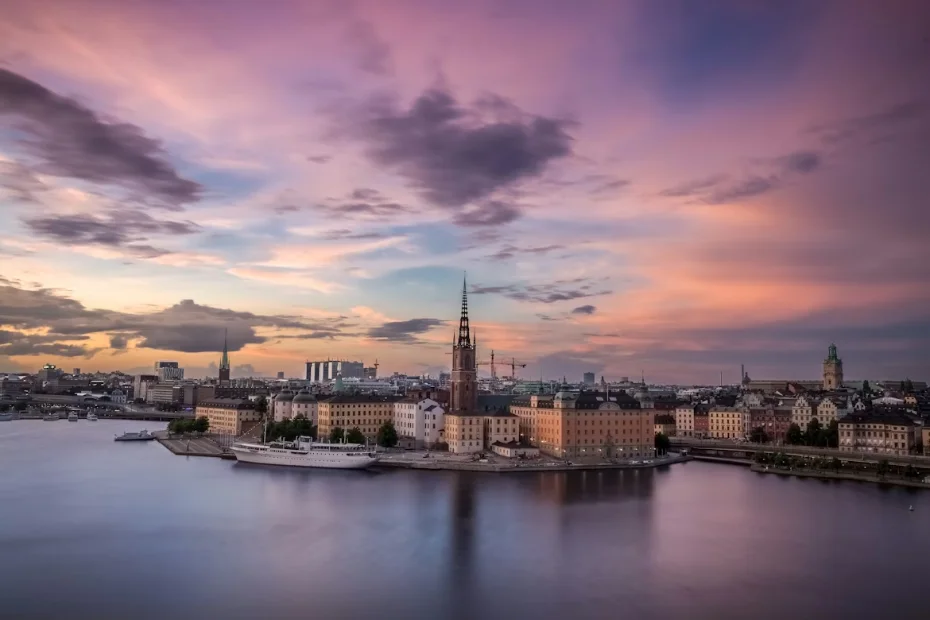
I came down from Finland with salt still in my hair and the idea that I'd seen the North. Stockholm corrected me politely, the way this whole country seems to correct you: gently, beautifully, without ever raising its voice. Fourteen islands stitched together by bridges and water, and beyond them an archipelago of thousands more — nobody agrees on the exact count, which tells you everything about how much sea there is here.
My first morning, I did the obvious thing and walked into Gamla Stan, the old town, where the streets are the colour of ochre and saffron and the cobbles have been polished by six centuries of feet. I got lost on purpose. That's the only way to find Mårten Trotzigs gränd, the alley barely wider than my shoulders, and the small squares where the city suddenly goes quiet and you remember you're standing on an island in the middle of a capital.
The archipelago runs on ferries
Stockholm makes the most sense from the water, so on day two I bought a ticket and took a ferry out into the archipelago. The boats leave from the centre and thread between islands the way buses thread between stops — pine and granite sliding past, red wooden cabins with white trim, the occasional swimmer braving water that is, let's be honest, character-building. I got off at Vaxholm, wandered a fortress island, ate cinnamon buns on a jetty, and caught a later boat back as the light went long and gold.
« Sweden doesn't shout. It hands you a ferry ticket and lets the islands do the talking. »
This is where I'll be honest about connectivity, because it's the house specialty. In Stockholm proper, the signal is excellent — fast, everywhere, the kind you stop thinking about. Out in the archipelago it gets thinner as you go: solid near the bigger islands and ferry hubs, patchier in the channels and on the small outer rocks where it's mostly forest and water. Nothing dramatic, but if you're heading far out, don't assume a bar of signal will follow you the whole way. I downloaded the ferry timetable and an offline map before leaving the city, and that little bit of foresight saved me twice.
A country that quietly stopped using cash
Here's the thing nobody warned me about loudly enough: Sweden has all but given up on cash. Cards work everywhere, contactless is the default, and locals pay each other with an app called Swish for everything from a coffee to splitting a market stall haul. I went days without touching a banknote — some cafés and museums genuinely prefer you don't. Which is charming until you realise that a dead phone here isn't an inconvenience, it's a wall. Keep it charged, keep a card as backup, and make sure your connection is the kind you can rely on, because in Stockholm your phone is quite literally your wallet.
Design, nature, and the line between them
What stayed with me is how Sweden refuses to choose between design and nature — it just folds them together. One afternoon I was in a Södermalm concept store running my fingers over chairs I could never afford; the next morning I was on a forested trail twenty minutes from the centre, completely alone with the birches. The Vasa, a warship that sank on its maiden voyage in 1628 and was raised three centuries later, sits in its museum looking impossibly intact. The Fotografiska gallery had me staring at walls until closing. And then a ferry home, every single time, the city reassembling itself across the water.
📶 Inès's tip
Sweden is in the EU/EEA, so if you're already travelling with a European plan, roam-like-at-home means it follows you here with no extra step — worth knowing before you buy anything new. Coming from outside Europe? Install your eSIM before you land and have it live the moment you reach Arlanda, because here your phone is your wallet (Swish, cards, ferry tickets) far more than it's your map. Download the archipelago ferry timetable and an offline map for the outer islands where signal thins. Check your phone's compatibility in 30 seconds here and find your plan on the destinations page (for a broader European trip, an EU/EEA plan works too).
What I take away
I arrived thinking I'd already met the North in Finland, and left understanding that the North has dialects. Stockholm's is one of water and quiet competence — a place where you pay with your phone, travel by ferry, and measure a good day in how many islands you touched. I kept just enough signal to confirm a boat, tap a card, and send my mother a photo of a city that floats. The rest, I let the archipelago handle.
— Inès, somewhere between two ferries.