
Peru: altitude, Cusco and Machu Picchu at my own pace
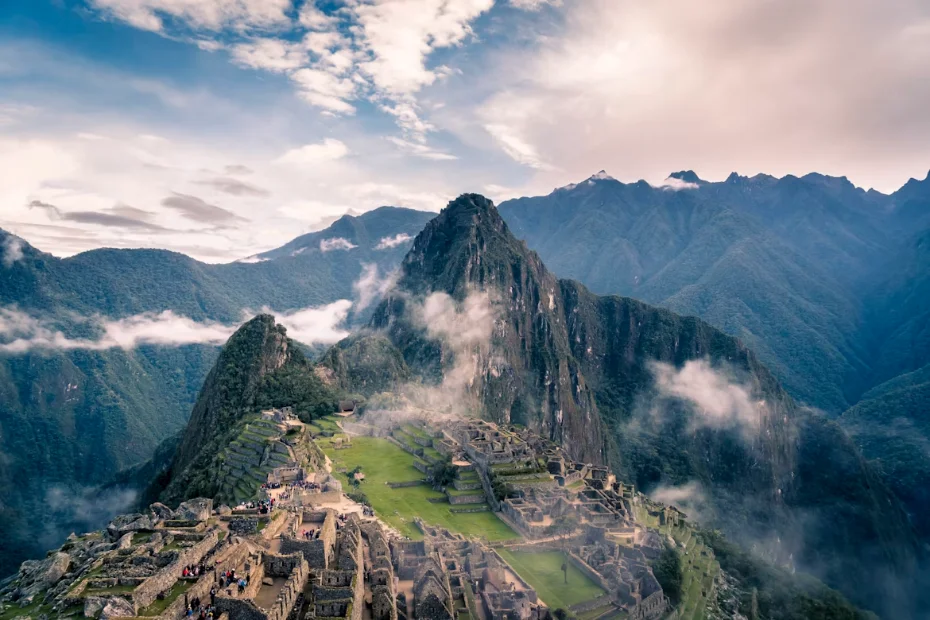
I landed in Cusco the way everyone warns you not to: straight in, no acclimatisation, lungs still set to sea level. The city sits at roughly 3 400 metres, and you feel it before you've even left the airport — a faint head-spin lacing up your shoelaces, a heartbeat that won't quite settle. The locals have a word for it, soroche, the altitude sickness, and they say it with the calm of people who watch travellers underestimate it every single day.
So I did the unglamorous thing. I gave myself two slow days in Cusco before going anywhere. No hikes, no early starts, just wandering the cobbled lanes around the Plaza de Armas at the pace of someone much older than me, drinking coca tea in every café that offered it and a frankly heroic amount of water. The mountains aren't going anywhere. Your red blood cells, on the other hand, need a minute.
Letting Cusco set the rhythm
Those slow days turned out to be the trip's quiet gift. Cusco is an Inca capital wearing a Spanish coat — colonial arcades built on stonework so precise you can't slide a coin between the blocks. I sat in San Blas with a sketchbook I barely used, listened to Quechua and Spanish braiding together in the market, and let my body do its patient chemistry. By the second evening the head-spin was gone and the breathlessness had shrunk to a polite reminder on the steeper streets.
Connectivity here, I'll be honest, was the easy part. In Cusco itself the signal was perfectly decent — I could message home from my guesthouse courtyard, pull up a map, check train times without drama. It's the moment you leave the city that the network starts keeping its own counsel, and I'd been warned enough to take that seriously.
« Up here, the mountain decides the pace — and you'd be wise to agree with it. »
The Sacred Valley, downhill on purpose
Seasoned travellers had given me one piece of advice that turned out to be gold: sleep lower than Cusco. So I dropped down into the Sacred Valley — the Río Urubamba threading between Pisac and Ollantaytambo, terraced hillsides stacked like green staircases, villages that sit a few hundred metres below the city. You acclimatise better sleeping low, and as a bonus the valley is gentler, warmer, slower. I spent a couple of nights in Ollantaytambo, a town whose Inca streets you still walk on today, with water running in stone channels exactly where it was meant to centuries ago.
Out here the connection got moody. In the valley towns it mostly held; on the winding roads between them, and the second I wandered uphill toward a ruin, it would simply step out of the room. I'd stopped expecting otherwise. Before leaving Cusco I'd downloaded the whole region offline — maps, the route to my guesthouse, a few articles for the slow bus — so the blank bars didn't matter. The eSIM did its real work in the gaps that counted: confirming a pickup, sending my mother a photo of the terraces at golden hour, nothing heroic, just the thread held.
The train, and then the mountain itself
From Ollantaytambo I took the train to Aguas Calientes, the little town crouched in the gorge below Machu Picchu. There's no road in — it's the train or a multi-day trek, and the train follows the Urubamba through a canyon that gets steeper and greener by the minute, cloud forest closing in until you half expect the rails to give up. I pressed my forehead to the glass like a child. No signal to speak of down there, and I didn't want any.
Some travellers arrive instead via the Salkantay trek, several days over a high pass with the snow peak watching over you — and from everything I heard along the way, that's deep dead-zone territory: gorgeous, remote, and no place to rely on a live map. Whichever way you come, the citadel at dawn is the kind of silence that reorganises you. I stood there as the mist lifted off the ridges, breathing carefully, absurdly grateful I'd given my body those slow days at the start so I could actually be present for this instead of fighting my own head.
📶 Inès's tip
Climb into altitude slowly — give Cusco a day or two before you push higher, sleep lower in the Sacred Valley if you can, go easy on coca tea and water, and don't shrug off soroche. For connectivity: Cusco is reliable, but the Andean roads, the Salkantay trek and the trains are genuinely patchy, so download your maps and route offline before you leave the city and treat the eSIM as your link for the moments that hold, not a constant feed. Check your phone is compatible in 30 seconds here and find your Peru plan on the destinations page (heading to Europe next? a single plan covers the whole zone — start with the EU option here).
What I carry back down
Peru taught me a patience I didn't pack for. The altitude won't be rushed, the mountains won't be rushed, and somewhere in the gaps where my phone fell silent I stopped trying to rush either. I came down from Machu Picchu slower, steadier, and oddly more connected — to the place, and to the few people I reached in the windows when the signal came back.
— Inès, somewhere above the clouds, breathing on purpose.