
Colombia: Bogotá, Cartagena and the coffee region
People warned me about Colombia the way they warn you about an ex they secretly still miss. « Be careful, » they said, eyebrows raised. And sure, you keep your wits about you here — but the country I drove through for three weeks is not the one those warnings were built on. It changed. It moved on. And honestly, so should the clichés.
I came in through Bogotá, the way most road trips of the Americas tend to start: a city that sits at 2,600 metres and lets you know it. The first afternoon, climbing the cobbled streets of La Candelaria with a coffee in hand, I was a little out of breath and completely sold. Colonial balconies, street art on every wall, the cable car up Monserrate watching over it all. The altitude is real — take the first day slow.
Bogotá, then down to the Caribbean
Bogotá is where I sorted out the practical stuff before hitting the road. Connectivity in the big Colombian cities is genuinely good — 4G that holds up in Bogotá, Medellín and Cartagena, fast enough to video-call home from a rooftop or pull up a map without sweating. I'd installed my eSIM before landing, so the phone found a network at the airport and I never touched a SIM-card counter. That mattered more than I expected: I booked an inter-city bus, checked an address, and called an apartment host all before leaving the terminal.
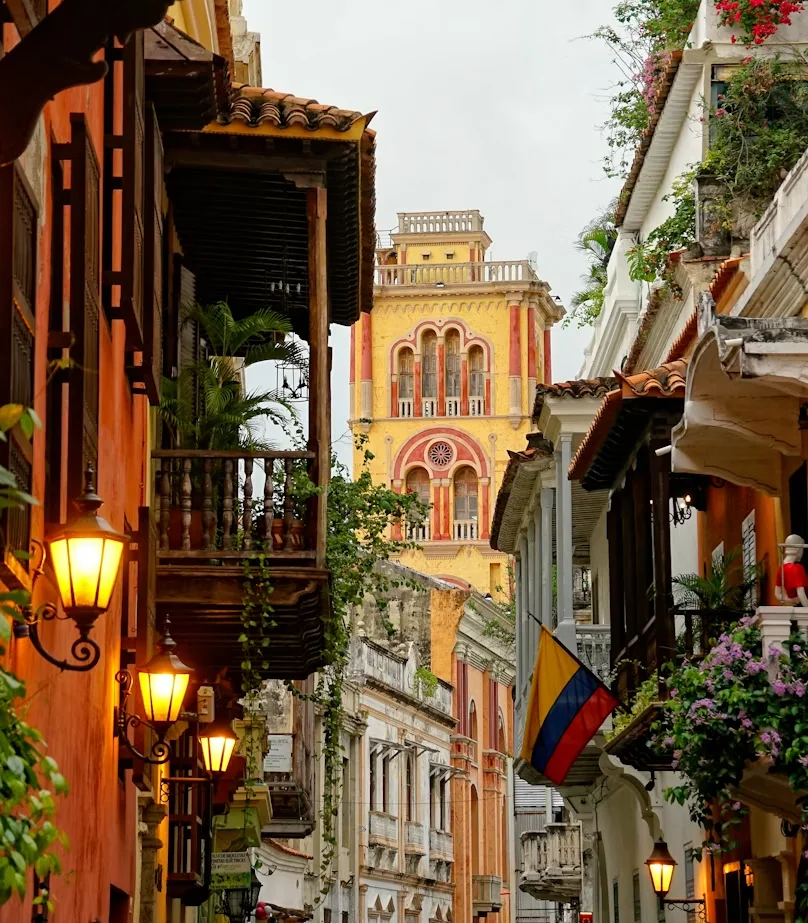
From the cool highlands I went to the heat — Cartagena, on the Caribbean coast. If Bogotá is altitude and grey skies, Cartagena is colour turned all the way up. The walled old town is a postcard that somehow lives up to itself: ochre facades, bougainvillea spilling over balconies, horse carriages, the city walls catching the sunset over the sea. I walked it for hours. I got pleasantly lost, which is the only correct way to see it.
« Colombia didn't ask me to lower my guard. It asked me to update my idea of it. »
A word on the heat and the honesty this blog runs on: in the old town and the main neighbourhoods, signal was solid. Out on day trips — the islands off the coast, the smaller beaches — it thinned out fast, and that's normal. I treated the city data as my anchor and downloaded an offline map for everything beyond it. No drama, just planning.
The coffee region, where the road slows down
Then came the part I'd been quietly waiting for: the Zona Cafetera. I based myself in Salento, a small town of brightly painted shopfronts that feels built for slowing down. The reason everyone comes is just outside it — the Cocora valley, where the wax palms, the tallest in the world, rise impossibly out of green hills like something drawn by a child who didn't know the rules. You hike among them in the mist and it doesn't quite feel real.
This is where you make peace with patchy coverage. The valley and the surrounding finca roads are properly rural — expect signal to come and go, and plan for the stretches where it's simply gone. I'd screenshotted the trail, told a friend my rough plan over breakfast in town while I still had bars, and left it at that. A coffee-farm tour, a jeep ride, palms taller than churches: not the place to be staring at a phone anyway.
Medellín, the city that reinvented itself
I ended in Medellín, and what a place to end. The City of Eternal Spring earns the name — that perfect climate, all year. But what stays with you is the reinvention: outdoor escalators climbing the hillside neighbourhoods, a metro the city is visibly proud of, cable cars treated as public transport, comunas that turned their story around through art and access. Back on strong city 4G, I spent an afternoon hopping the metro and the cable cars, pin-dropping my route, sending my mum a video from a gondola swaying over the valley.
📶 Sarah's tip
Colombia is outside the EU, so a European plan won't follow you here — sort out local data before you go. Install your eSIM before you land so the phone connects the second you reach the airport; you'll want it for a ride, a map and your first booking. Lean on the strong city signal in Bogotá, Cartagena and Medellín, but download offline maps for the coast and the coffee region, where coverage thins out for real. Check your phone's compatibility in 30 seconds here and find your Colombia plan on the destinations page (heading somewhere in the EU/EEA next? that one's covered on the European destinations page).
What I take away
Three weeks, four very different Colombias: highland Bogotá, Caribbean Cartagena, the green hush of the coffee hills, the bright energy of Medellín. Basic caution, yes — the same street sense you'd use anywhere. But mostly a country that has quietly rewritten itself and is waiting for the rest of us to notice. Good signal where the cities are, honest gaps where the wild begins, and a thread back home for the moments worth sharing.
— Sarah, somewhere on the road between two coffees.