
Bolivia: high-altitude La Paz and the Uyuni salt mirror
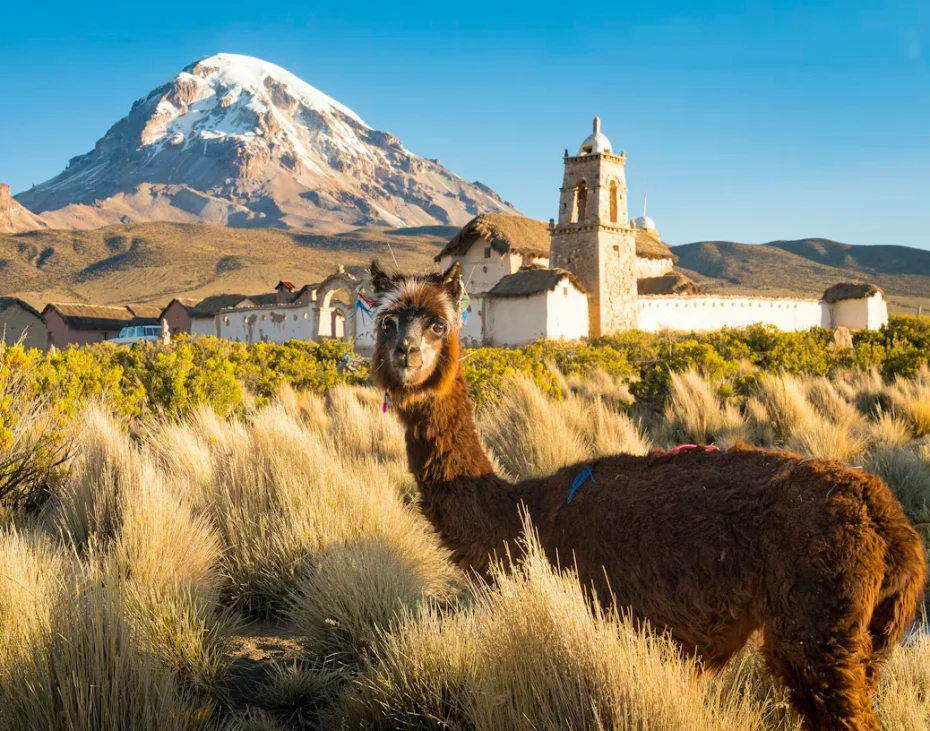
My plane landed at El Alto, the airport that serves La Paz, and the first thing Bolivia did was take my breath away — literally. The runway sits at over 4,000 metres, higher than most peaks I'd ever stood on in Europe. I walked twenty steps with my backpack and had to stop, hands on knees, like an old woman. Welcome to the altiplano: the body talks here, and you'd better listen.
La Paz spills down a canyon below, the city centre still hovering around 3,600 metres. From the airport you drop into it, and the whole place unfolds underneath you — brick houses climbing the slopes, the Illimani standing white and enormous at the far end. I'd planned this trip on a shoestring, and Bolivia rewards that: it's one of the cheapest countries I've ever backpacked. But the altitude doesn't care about your budget. It charges everyone the same toll.
Letting the altitude win, on purpose
Everyone told me the same thing and they were right: don't fight it. The first two days in La Paz I did almost nothing — walked slowly, drank litres of coca tea, slept badly the first night the way you do up here, and skipped the wine. Soroche, the altitude sickness, isn't a joke: headaches, nausea, the feeling your skull is two sizes too small. Acclimatising before heading even higher onto the altiplano isn't lost time. It's the trip working as designed.
Once my lungs caught up, La Paz turned magnificent. I rode the teleférico — the cable cars that double as the city's metro — straight up the canyon wall, the whole bowl of the city tipping away beneath my feet. I ate at the Mercado Lanza for almost nothing, got pleasantly lost in the Witches' Market among dried herbs and llama charms, and watched the sun set the Illimani on fire from a rooftop. The city earns its altitude.
« On the altiplano, the bars on your phone vanish long before the horizon does. »
Let's talk signal, because that's why you're here. In La Paz itself, connectivity is decent — I had 4G across most of the centre, enough to message my hostel, book a tour, send my mum a photo of the Illimani. Order of magnitude: fine for the basics, not always fast, weaker as you climb the slopes. But the second you leave the city for the altiplano, it falls off a cliff. On the road south and out on the Salar, coverage is patchy to nonexistent. I'm not going to pretend otherwise: an offline map isn't a nice-to-have here, it's the difference between knowing where you are and not.
Uyuni: walking on a mirror
The Salar de Uyuni is the largest salt flat on Earth, and nothing prepares you for it. I went in the rainy season, when a thin film of water turns the whole expanse — over ten thousand square kilometres of it — into a perfect mirror. You walk and the sky is under your feet. The horizon disappears. Clouds drift below your boots. I've never felt so small and so happy at the same time. The four-wheel-drive tours from Uyuni town take you out across it, often onward to the coloured lagoons and the geysers higher still, all of it well past 3,600 metres.
Out there, my phone was a camera and nothing else — no signal for hours at a stretch, which is exactly right, and exactly why you prepare. I'd downloaded the offline map, screenshotted my booking, and told my hostel my rough return time before leaving. The eSIM did its real work in town: confirming the tour the night before, and the moment we rolled back into Uyuni, pinging my next bus and letting my family know the girl on the mirror had made it back to dry land.
📶 Camille's tip
Sort your data before you fly into Bolivia, so it's live the moment you land at El Alto — you'll want it for a taxi and your hostel while your lungs are still adjusting. Then accept the truth of the altiplano: download an offline map of La Paz, the Uyuni region and your route, because out on the Salar there's effectively no coverage and you cannot rely on being online. Check your phone's compatibility in 30 seconds here and find your Bolivia option on the destinations page — and if your trip also passes through Europe, a regional EU/EEA plan is possible there too.
What the altiplano taught me
Bolivia humbled me in the best way. It made me walk slower, breathe deliberately, and accept that some of the most beautiful places on the planet are exactly the ones where your phone goes dark. That's not a flaw to fix — it's the deal. You prepare for the silence so you can actually be present in it, with just enough signal in La Paz to keep the people you love in the loop, and an offline map for everywhere the network can't reach.
— Camille, somewhere above 3,600 metres, catching her breath.